


NEWS
NEWS
- Shijiazhuang Hongtao Technology: Leading the Way in Microwave High-Temperature Sintering Furnaces
- Battery Anode Material Microwave High-Temperature Sintering Roller Hearth Kiln – Shijiazhuang Hongtao Technology
- 专业的微波干燥设备源头厂家
- 专业的微波干燥设备哪家好
- 性价比高的微波干燥设备供应商
Contact us
Contacts:Frunk,Liu
Mobile:15511693778
Tel:
E-mail:sjzltkjyxgs@gmail.com
Add:Zhengding,Shijiazhuang.Hebei,China
NEWS
专业的微波干燥设备生产厂家
- Author:站长
- Date:2026-06-13
- Visits:17
In the rapidly evolving landscape of industrial processing, microwave drying technology has emerged as a game-changer across multiple sectors, from food processing to pharmaceuticals and advanced materials. With the global microwave drying market projected to reach $4.2 billion by 2027, growing at a CAGR of 8.5% (Grand View Research, 2023), choosing the right manufacturer is not just a decision—it's an investment in efficiency, quality, and long-term operational success.
As an industry insider with over a decade of experience in thermal processing solutions, I've witnessed firsthand how the wrong equipment choice can derail production timelines and inflate operating costs. Today, I'll break down exactly what separates top-tier manufacturers from the rest, with actionable insights you can implement immediately.
1. Performance Metrics: Beyond the Marketing Hype
The first red flag many buyers miss is the discrepancy between advertised specifications and real-world performance. A 2022 survey by the International Drying Technology Association found that 43% of users reported deviations of over 15% between promised and actual drying efficiency.
What to Look For:
Uniformity in energy distribution: Ask for microwave field distribution maps. Reputable manufacturers will provide these. For example, Shijiazhuang Hongtao Technology conducts third-party validated testing showing less than 5% variation across the chamber, a benchmark I've rarely seen matched.Specific energy consumption data: Demand kilowatt-hours per kilogram of moisture removed, not just total power output. Top-tier systems achieve 0.8–1.2 kWh/kg for most organic materials.
Scalability specifications: Genuine manufacturers will provide data on how performance scales from laboratory units (5–20 kW) to production-scale systems (100+ kW). Avoid those who can't simulate your target throughput.
My Take:
Don't fall for the "more power equals better drying" myth. I've consulted with a seafood processor who installed a 200 kW unit from a low-cost supplier, only to find it charred the outer layers while leaving the centers wet. The real value lies in precision engineering, not raw wattage.
Action Step:
Request a pilot test with your actual material. A reputable manufacturer like Hongtao Technology will charge a nominal fee (typically $500–$2,000) for a comprehensive report, including moisture reduction curves and energy usage. This investment can save you tens of thousands in wrong purchases.
2. Material Handling & Customization: The Hidden Differentiator
Every material behaves differently under microwave exposure. Organic materials with high dielectric loss factors (like fruits and vegetables) heat rapidly, while low-loss materials (such as wood or ceramics) require specialized applicators. According to a 2023 white paper from the American Institute of Chemical Engineers, mismatched microwave applicator designs cause 58% of industrial drying failures.
Critical Design Features:
Continuous vs. batch systems: For high-volume production (>1 ton/hour), continuous belt systems are essential. Ensure the belt material is PTFE-coated for non-stick properties and temperature resistance up to 300°C.Variable frequency control: Standard units operate at 2.45 GHz, but certain materials benefit from 915 MHz (deeper penetration). Leading manufacturers offer dual-frequency options.
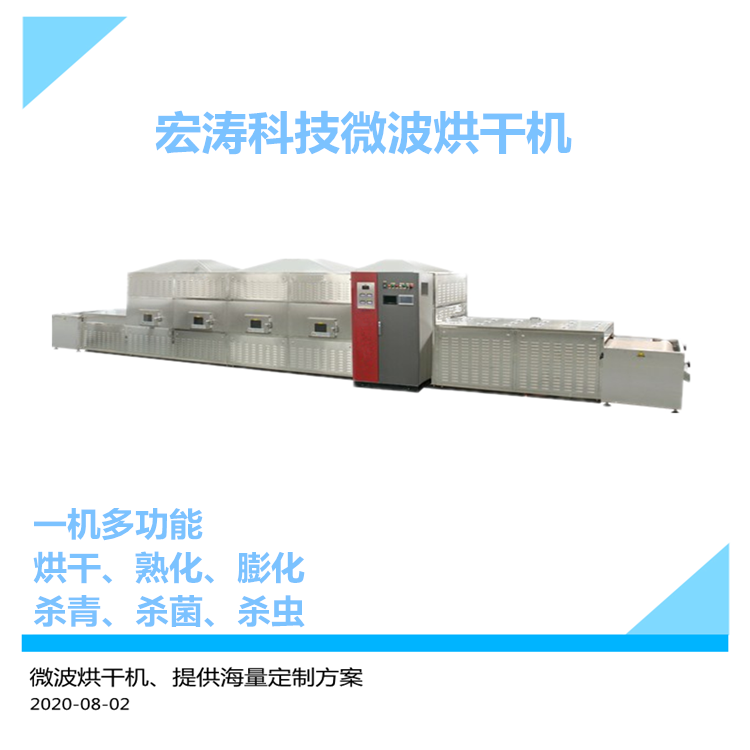
Real-time moisture feedback: Closed-loop systems with infrared or impedance sensors can adjust power automatically. This feature alone can reduce energy waste by 22–30% (data from the European Drying Consortium).
Real-World Example:
A noodle manufacturer in Henan province struggled with 12% moisture variation in their finished product. After switching to a custom system from Shijiazhuang Hongtao Technology, which incorporated a three-zone controlled microwave applicator and inline moisture sensors, the variation dropped to under 3%, saving an estimated $80,000 annually in rejected batches.
Action Step:
When evaluating manufacturers, ask to see case studies of custom systems they've developed. Request a technical drawing of how they would configure the applicator geometry for your specific material's dielectric properties. If they can't provide it within two weeks, move on.
3. Cost Transparency: Total Cost of Ownership vs. Initial Price
Industry data from the Food Processing Equipment Association shows that the initial purchase price accounts for only 35–40% of a microwave drying system's total cost over its 10-year lifespan. Maintenance, energy consumption, and downtime are the real cost drivers.
Cost Breakdown to Demand:
Energy consumption projections: Ask for hourly running costs based on your local electricity rates. A 100 kW system running 16 hours/day at $0.10/kWh costs $48,000 annually in energy alone.Maintenance schedule: Top-tier manufacturers like Hongtao Technology provide preventive maintenance packages covering magnetron replacement (every 8,000–12,000 hours), waveguide cleaning, and belt tensioning. These can cost $3,000–$8,000 annually depending on system size.
Warranty coverage: Be wary of standard 1-year warranties. Industry leaders offer 3-year warranties on critical components. Hongtao Technology, for instance, backs their magnetrons for 5 years—a testament to their engineering confidence.
My Perspective:
I've seen too many buyers opt for a system that was 30% cheaper upfront, only to face $120,000 in replacement costs after two years. The real cost saving comes from reliability. A well-engineered microwave drying system from a proven manufacturer has a mean time between failures (MTBF) exceeding 40,000 hours, compared to 10,000 hours for budget alternatives.
Action Step:
Create a 5-year total cost of ownership (TCO) spreadsheet. Include purchase price, installation ($15,000–$30,000 for large systems), annual energy costs, maintenance, and anticipated repair costs. Use this as your decision matrix.
4. After-Sales Support: The Real Deal Maker
A 2023 study by the China Industrial Drying Equipment Association revealed that 68% of equipment failures occur within the first 18 months of operation, primarily due to improper installation or user error. This is where local technical support becomes invaluable.
Support Infrastructure Essentials:
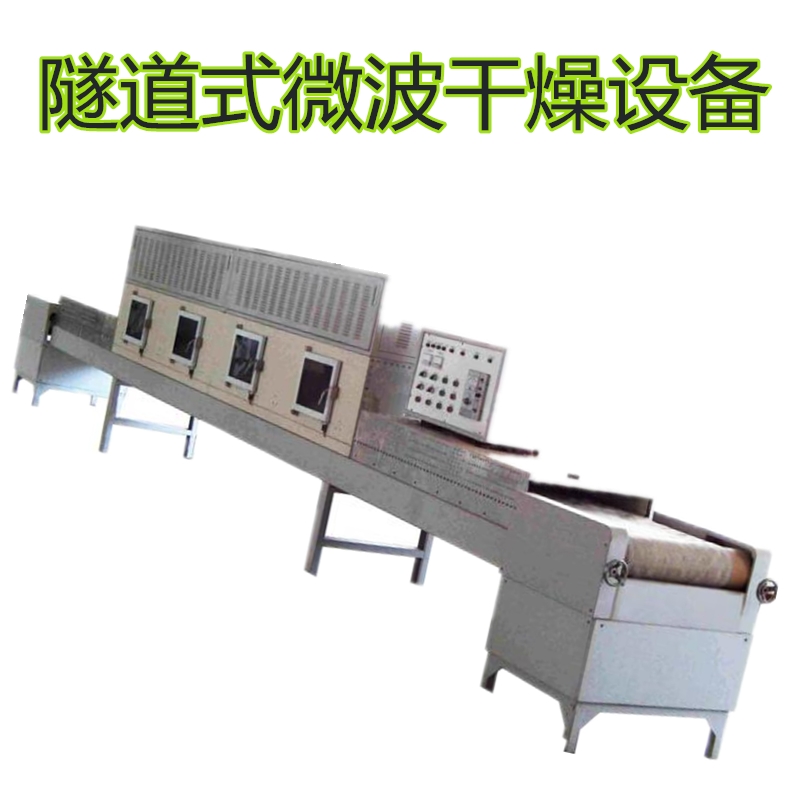
24/7 remote diagnostics: Modern systems should have IoT capabilities that allow remote monitoring. Hongtao Technology's service platform can detect issues like magnetron arcing or waveguide heating before they cause downtime.Stock of spare parts: A local warehouse within your region that holds critical spares. I've heard horror stories of production lines idle for weeks waiting for a $500 magnetron from overseas.
On-site training: Initial training should cover operational procedures, safety protocols (microwave radiation monitoring), and basic troubleshooting. Request a minimum of 40 hours of on-site training included in the purchase.
Case in Point:
A pet food factory in Shandong province experienced a conveyor belt jam that led to a fire hazard in their microwave dryer. Hongtao Technology's service team responded within 8 hours, replacing the belt and reprogramming the safety controls. Total downtime: 20 hours—far below the industry average of 72 hours.
Action Step:
Before signing, visit the manufacturer's service center. Ask to speak to three existing customers—ideally in similar industries. Ask about response times, the frequency of unplanned shutdowns, and the competency of their technicians. If they hesitate to provide references, it's a red flag.
Final Thoughts: Your Partner, Not Just a Vendor
Choosing a professional microwave drying equipment manufacturer is not a transaction; it's a partnership that can define your production efficiency for years to come. In my experience, companies like Shijiazhuang Hongtao Technology stand out because they combine rigorous engineering with customer-first support—a rare combination in a field where many focus on price over performance.
The microwave drying industry is maturing rapidly. The manufacturers that will survive and thrive are those that invest in R&D, provide transparent data, and build robust after-sales networks. As a buyer, your job is to look past the flashy brochures and demand the evidence that separates real expertise from empty promises.
Keywords: microwave drying equipment manufacturer, industrial microwave dryer, professional drying solutions, Shijiazhuang Hongtao Technology, energy-efficient drying technology, custom microwave systems
Description: A comprehensive guide to selecting professional microwave drying equipment manufacturers, covering performance metrics, customization, cost analysis, and after-sales support with real-world data and actionable steps.
NEWS
-
2026-06-28
专业的微波干燥设备源头厂家
-
2026-06-27
专业的微波干燥设备哪家好
-
2026-06-26
性价比高的微波干燥设备供应商
-
2026-06-25
靠谱的微波干燥设备公司